
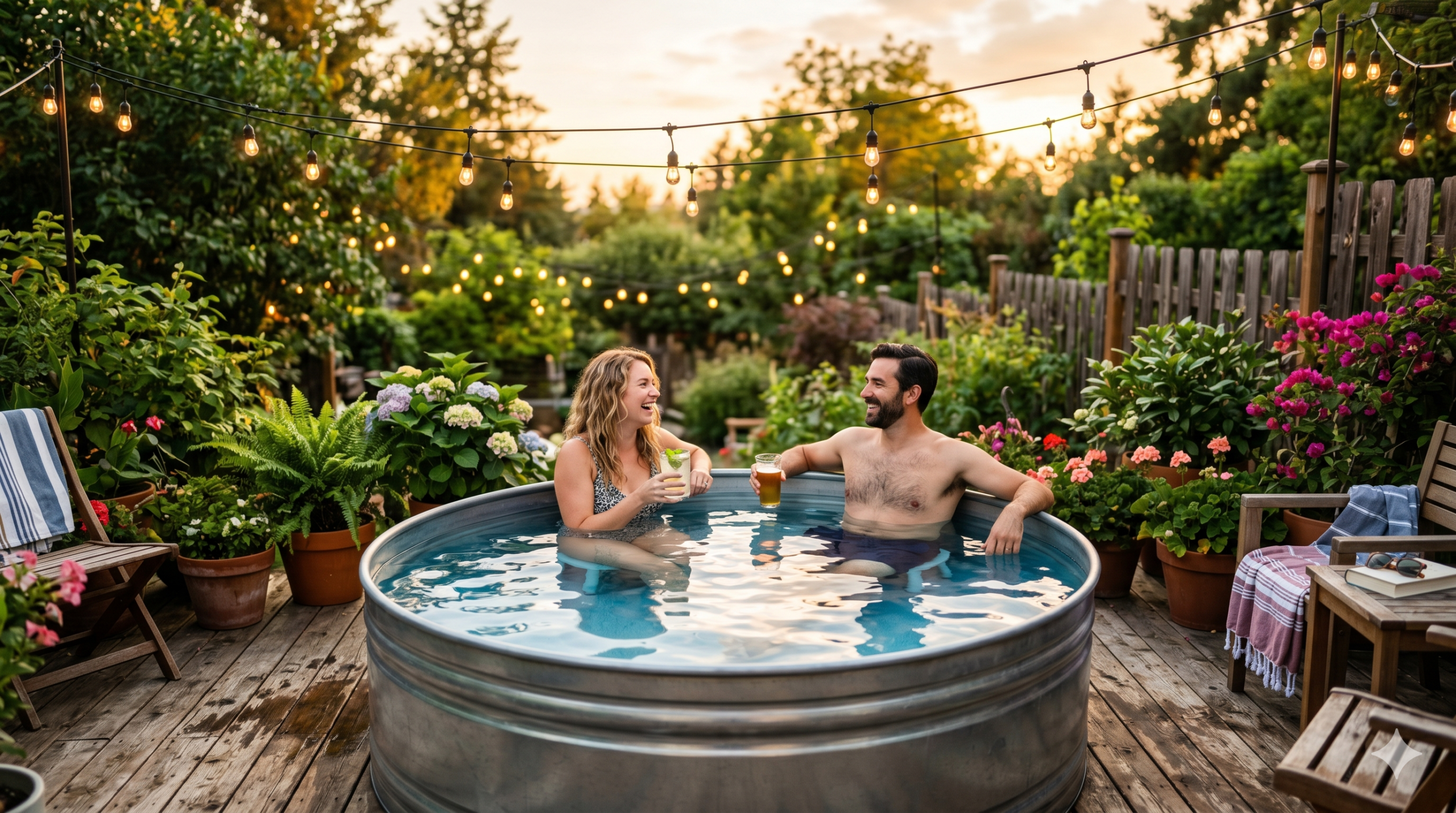
A DIY stock tank pool costs $300–$600 to build, sets up in a weekend, and looks better than most above-ground pools at twice the price. If you’ve been seeing them all over Pinterest and wondering whether they’re actually worth it — yes, they are. Here’s everything you need to build one the right way.
What Is a DIY Stock Tank Pool?
A stock tank pool is exactly what it sounds like — a galvanized steel or poly livestock watering tank repurposed as a backyard pool. Farmers have used these tanks for decades. Backyard DIYers figured out they make perfect small pools: sturdy, durable, compact, and a fraction of the cost of any above-ground frame pool.
They’re ideal for small yards, renters, deck builds, patios, or anyone who wants a legitimate pool experience without the $3,000–$15,000 price tag of a traditional above-ground or inground pool.
Stock Tank Pool Sizes — Which One Do You Need?
| Tank Size | Gallons | Fits | Best For | Est. Price |
|---|---|---|---|---|
| 6ft round | ~150 gal | 2 adults | Compact yards, decks, hot tub conversion | $180–$250 |
| 8ft round ✓ Most Popular | ~300 gal | 2–3 adults | Best all-around size | $250–$350 |
| 10ft round | ~500 gal | 3–4 adults | Families, larger yards | $350–$500 |
| 2ft x 4ft oval (Behlen 90-gal) | 90 gal | 1 adult | Solo soak, cold plunge, small patio | $120–$180 |
Where to buy: Tractor Supply Co. and Rural King carry galvanized Tarter tanks in-store. For poly tanks (Rubbermaid, Behlen), Amazon typically has the best prices with free Prime shipping — and you skip the hassle of strapping a giant steel tank to your roof.
Galvanized Steel vs. Poly — Which Tank Is Better for a Pool?
Galvanized steel (Tarter, Co-Z, Behrens) is the classic stock tank pool look — shiny silver exterior, round shape, extremely durable. The downside: chlorine degrades the zinc galvanization over time, which is why a vinyl liner is essential for steel tanks.
Poly/structural foam (Rubbermaid, Behlen) is seamless, smooth-walled, UV-resistant, and doesn’t rust or react with pool chemicals. No liner needed. The trade-off: they’re lighter (can tip in high wind if empty), and the classic “pool aesthetic” isn’t quite as strong.
For most people building their first stock tank pool, a Rubbermaid 300-gallon poly tank is the easiest setup — no liner required, pre-drilled plug hole, holds 2 adults, and ships to your door.
The Rubbermaid 300-Gallon — Best Stock Tank Pool for Most People
Seamless structural foam, no rust, no liner needed, UV-resistant poly, pre-drilled drain plug hole. The most recommended stock tank pool on the internet for good reason. Holds 2 adults comfortably.
Behlen 90-Gallon Galvanized — Best Compact / Cold Plunge Option
Heavy-gauge galvanized steel, round-end design, perfect for a solo cold plunge or small-patio soak. Heats up fast with a solar cover, cools down fast with ice. The most Instagrammable stock tank setup.
Do You Need a Liner for a Stock Tank Pool?
For galvanized steel tanks: yes, strongly recommended. Chlorine reacts with the zinc galvanization, accelerating corrosion and shortening the tank’s life. A heavy-duty vinyl liner creates a barrier between the water/chemicals and the metal. It also protects swimmers from rough seams and edges.
For poly tanks (Rubbermaid, Behlen poly): no liner needed. Poly is chemically inert — chlorine won’t affect it.
Custom-cut heavy-duty vinyl, UV-resistant, installs in 10 minutes. For 6ft galvanized tanks.
Same heavy-duty UV-resistant vinyl, sized for 8ft round tanks. Lasts multiple seasons.
Filtration: The Most Important Part People Skip
This is where most first-time stock tank pool builders go wrong. Without filtration, water in a stock tank goes green in 3–5 days. Algae and bacteria grow fast in warm, stagnant water — especially in a 300-gallon tank sitting in full sun.
You don’t need an expensive system. The Intex Krystal Clear 1,000 GPH cartridge pump is the go-to choice for any stock tank in the 50–500 gallon range. It circulates the water, catches debris in a replaceable cartridge filter, and runs quietly on 35 watts. At $35–$50, it’s the best money you’ll spend on this build.
Intex Krystal Clear 1,000 GPH Filter Pump — Essential
Works with any stock tank 50–500 gallons. Keeps water clean and clear with easy cartridge swaps. Runs on standard outdoor outlet. Don’t skip this.
How to Drain Your Stock Tank Pool
Rubbermaid poly tanks come with a pre-drilled 1.5″ plug hole — you just need a drain kit to make it usable. Galvanized tanks typically don’t have a drain hole, so you either drill one or siphon.
The easiest setup: a brass faucet drain kit that threads into the existing plug hole (Rubbermaid tanks) or through a drilled hole. Takes 30 minutes to install, no plumbing experience needed. Comes with rubber gaskets, pipe reducer, plumber’s tape, and a 10ft hose — drain directly to your garden.
Stock Tank Pool Drain Plug Kit — Brass Faucet + 10ft Hose
30-minute install into the existing plug hole on Rubbermaid and most poly tanks. Everything included. Drain to your lawn or garden.
Chemicals: What You Actually Need
Stock tank pool chemistry is simpler than a full-size pool but you can’t ignore it. The basics: chlorine to sanitize, algaecide to prevent green water, and a weekly shock treatment to keep the water fresh. Test strips let you check levels in 30 seconds.
The most common mistake: using chlorine tablets directly in a galvanized steel tank. The undissolved tablet sits against the metal and causes rust spots. Always dissolve chlorine in a bucket first or use a floating dispenser.
In The Swim Pool Chemical Startup Kit
Covers pools up to 7,500 gallons. Includes chlorine shock, algaecide, water clarifier, and stain preventor — everything to balance your water on day one. One kit covers a full season for most stock tank builds.
Maintenance: Keeping It Clean All Summer
With a filter pump running, weekly chemical checks, and a basic skimmer, a stock tank pool is genuinely low-maintenance — 10 minutes a week. Here’s the simple routine:
- Run the filter pump 6–8 hours daily (set it on a timer)
- Skim leaves and debris every 2–3 days
- Test water chemistry weekly with test strips
- Shock the water every 1–2 weeks, or after heavy use
- Drain and refill every 4–6 weeks in peak summer (300-gallon tanks are quick to drain)
Catches leaves, bugs, and fine debris. Works perfectly with stock tanks — no telescoping pole needed for the compact size.
The Turnkey Option: Bestway TANX
Don’t want to source a tank, pump, liner, and drain kit separately? The Bestway TANX is a purpose-built stock tank pool alternative — galvanized steel look, 10ft round, and comes with a pump, filter, cover, and cup holders already included. No DIY sourcing required, no separate purchases.
Bestway TANX 10ft Stock Tank Pool — Turnkey
Galvanized aesthetic, 10ft round, pump + filter + cover + cup holders included. Best option if you want stock tank style without the Saturday hardware run.
Complete Cost Breakdown
| Item | Product | Est. Cost | Required? |
|---|---|---|---|
| Tank (8ft poly) | Rubbermaid 300-gal | $250–$300 | Yes |
| Filter pump | Intex Krystal Clear 1,000 GPH | $35–$50 | Yes |
| Drain kit | Brass faucet + hose | $20–$30 | Yes |
| Chemicals | In The Swim startup kit | $30–$45 | Yes |
| Liner (steel tanks only) | 8ft vinyl liner | $40–$60 | Steel tanks only |
| Skimmer net | US Pool Supply | $10–$15 | Recommended |
| Total (poly tank, no liner) | $345–$440 | ||
| Total (galvanized + liner) | $380–$500 | ||
Frequently Asked Questions
How long does a stock tank pool last?
A galvanized steel tank with a liner typically lasts 5–10+ years if you maintain proper chemical balance and don’t let it sit empty for extended periods. Rubbermaid poly tanks are essentially indestructible — they’re rated for 10–20+ years of outdoor use.
Can you put a stock tank pool on a deck?
Yes — but verify your deck’s load rating first. A 300-gallon stock tank filled with water weighs approximately 2,800 lbs. Most decks are rated for 40–50 lbs per square foot; an 8ft tank covers roughly 50 sq ft, so the load is manageable. When in doubt, consult a contractor.
Do you need a permit for a stock tank pool?
In most jurisdictions, no — stock tank pools fall under temporary above-ground pool regulations, which typically don’t require a permit for pools under 24 inches deep. Check your local ordinances, especially for HOA communities.
Can you turn a stock tank pool into a hot tub?
Yes — this is one of the most popular upgrades. You add a propane tankless water heater (Camplux 10L is the most recommended), a circulation pump, and insulated cover. Total heating upgrade cost: $250–$400. We have a dedicated guide coming soon.
How often do you need to change the water?
With a filter pump and regular chemical maintenance, you can go 4–6 weeks between full water changes in peak summer. A 300-gallon tank drains in about 10 minutes with a proper drain kit — a full water change takes less than an hour start to finish.
Want a Larger Pool?
If you need more room to actually swim — or have a family with kids — check out our full guide to the best above-ground frame and inflatable pools from 15ft to 24ft.